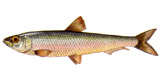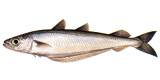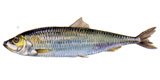

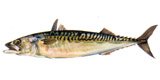
 An epipelagic and mesodemersal species, most abundant in cold and temperate, shelf areas. Atlantic mackerel school by size. They overwinter in deeper waters but move closer to shore in spring when water temperatures range between 11° and 14° C. Two separate populations with little or no interchange seem to exist in the northwestern and northeastern Atlantic (including the Mediterranean).
In the western population spawning takes place from Cheasapeake Bay to Newfoundland, initiating in the south in spring and progressively extending northward during the summer. Most of the spawing take place within 10 to 30 miles from shore, but never in low-salinity estuaries. Large fish are the first to arrive at the spawning sites.
The eastern population spawns from March to April in the Mediterranean, from May to June off southern England, northern France and in the North Sea, and from June to July in the Kattegat and Skagerrak. Fecundity, in a medium-sized female, fluctuates between 200 000 and 450 000 eggs per season and increases with size; spawning occurs in batches. Maturity is attained at an age of 2 or 3 years. Juvenile Atlantic mackerel feed on zooplankton (fish larvae, small crustaceans, pteropods). As they grow, they are in turn preyed upon by tunas, sharks and dolphins.
- Trim: HGT (Headed, Gutted, Tail off)
- Freezing: ship frozen / land factory frozen