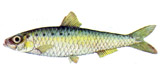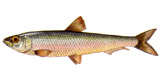
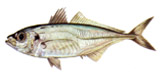
 The Atlantic horse mackerel, Trachurus trachurus is a species of mackerel in the family Carangidae. It gets its common name from the legend that other smaller species of fish could ride on the back of it over great distances. Other common names include common scad, maasbanker, pollock, scad, saurel, rough scad.
The Atlantic horse mackerel can be found in the north-eastern Atlantic from Iceland to Senegal, including the Cape Verde islands, and also in the Mediterranean and, rarely, in the Black Sea.
It congregates in large schools in coastal waters, where it feeds on crustaceans, squid, and other fishes. There are two main populations: the west stock which spawn in the eastern Atlantic off the coasts of western Europe, and the north stock which spawn in the North Sea.
- Trim: HGT (Headed, Gutted, Tail off)
- Freezing: ship frozen / land factory frozen