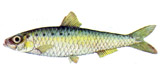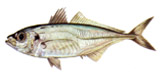

 A primarily coastal pelagic species, to a lesser extent epipelagie or mesopelagic over the Continental slope, occurring from the surface to about 250 or 300 m depth. Seasonal migrations may be very extended, the fish in the northern hemisphere moving further northward with increased summer temperatures, and southwards for overwintering and spawning. The reverse pattern generally applies to populations in the southern hemisphere. Schooling by size is well developed and initiates at approximately 3 cm. Schools of adults are the most compact and structured. Spawning most often occurs at water temperatures of 15° to 20°C. Spawning occurs in several batches of 9 fish with the total number of eggs per female ranging from approximately 100 000 to 400 000. Its feeding is opportunistic and non-selective, the diet of adults ranging from Copepods and other Crustaceans to fish and squid. Its predators include tunas, white seabass (Cynoscion nobilis), yellowtail (Seriola lalandi) and other fishes, as well as sea lions, sharks and pelicans.
- Trim: HGT (Headed, Gutted, Tail off)
- Freezing: ship frozen / land factory frozen